
Synchronized acquisition
Capture terminal temperature rise, ambient temperature, and contact resistance as current increases through each stage.
AUTOMOTIVE VALIDATION
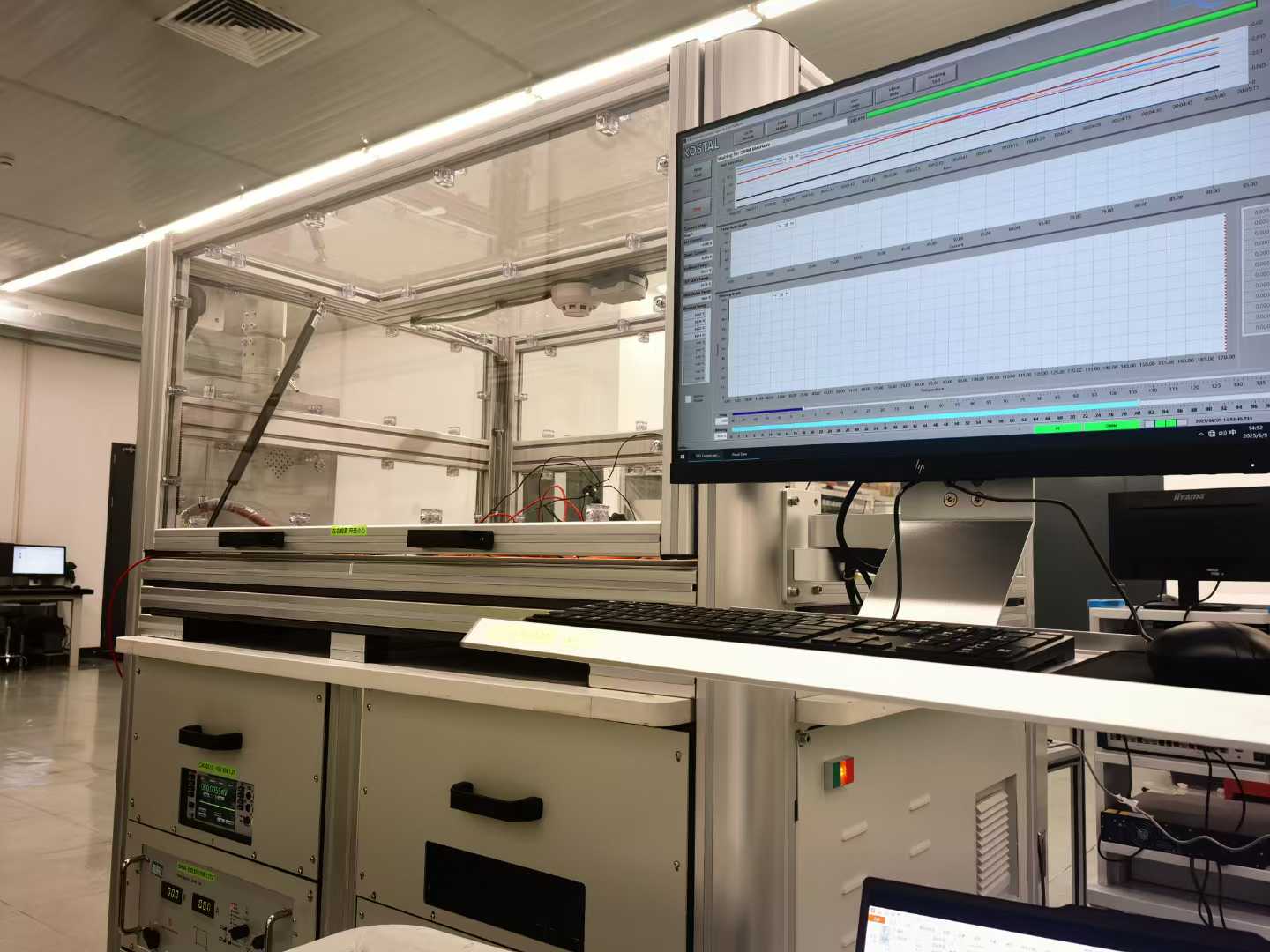
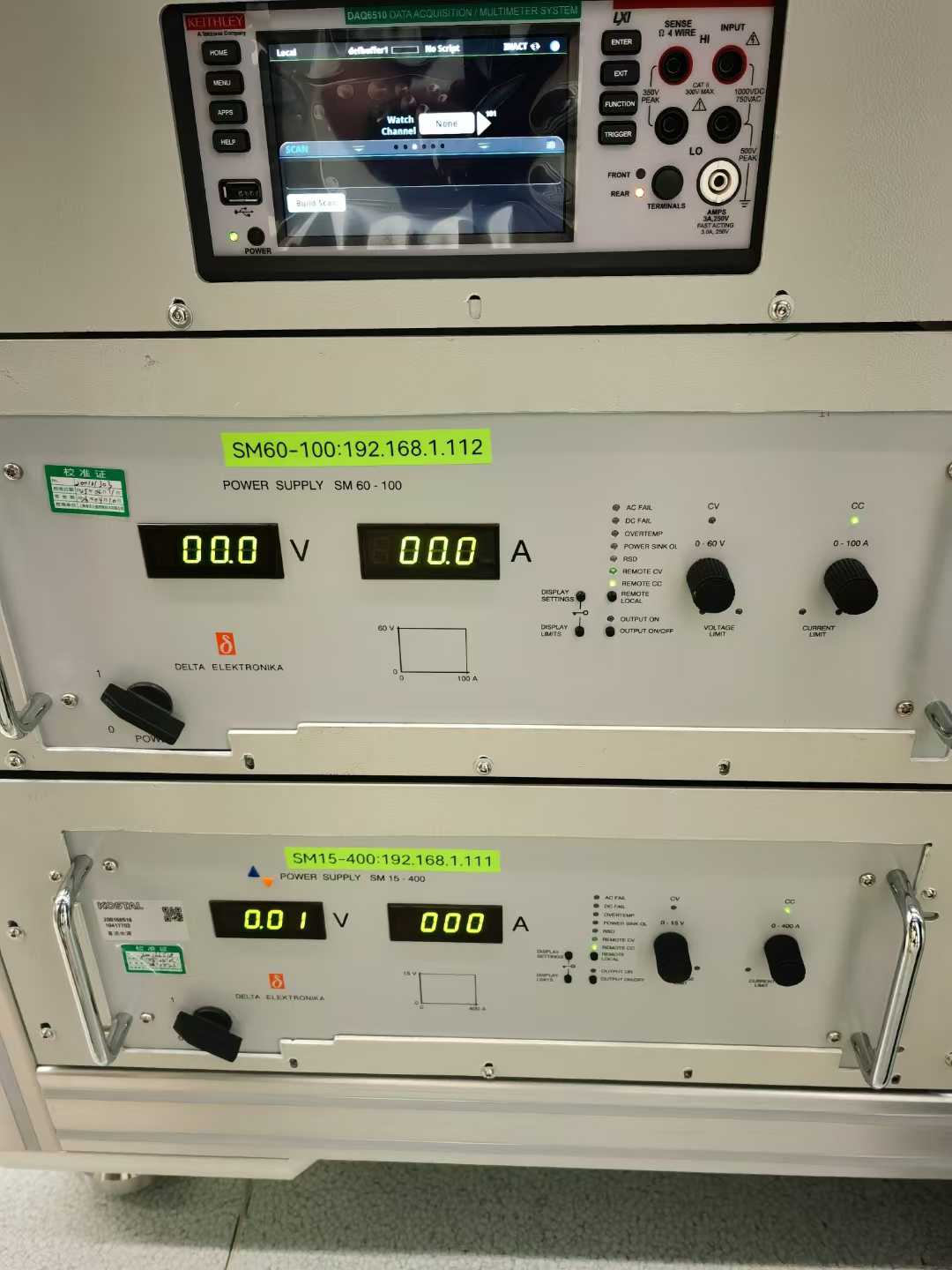
Power sources, instruments, environmental conditions, and test software operate as one validation platform to identify safe current-carrying limits across ambient temperatures.
PROJECT CONTEXT
A connector's maximum current-carrying capability decreases as ambient temperature rises. Derating tests apply electrical and thermal stress to establish a usable current-temperature relationship.
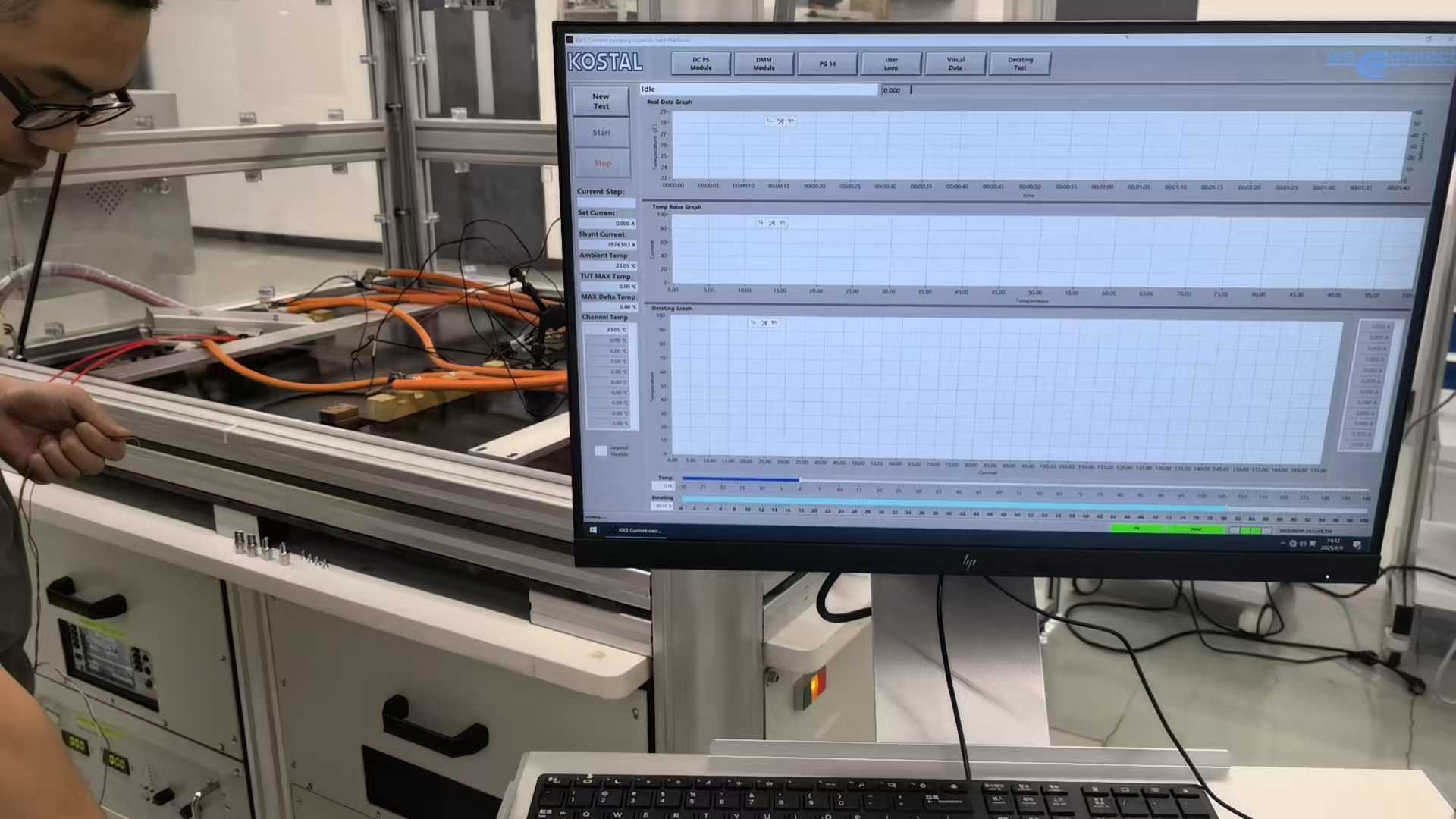
The platform coordinates power, measurement, data recording, and process control around the device under test, making the test sequence, critical states, and results visible in one working environment.
Capture terminal temperature rise, ambient temperature, and contact resistance as current increases through each stage.
Observe whether temperature rise or contact resistance reaches the applicable criterion and identify the current-carrying limit.
Transform discrete measurements into an intuitive derating curve that supports connector selection and vehicle electrical safety margins.
Equipment, test conditions, and data are organized in repeatable stages.
Define the device under test, environment, current steps, and measurement channels.
Increase current according to the test plan and maintain each required stabilization period.
Continuously acquire temperature and resistance data to evaluate the governing limits.
Compile results across ambient temperatures into the current-temperature derating relationship.
Make the relationship between temperature and current-carrying capability observable and comparable.
Provide clearer validation evidence for harness, connector, and vehicle electrical system design.
Retain process data and curve results for review, analysis, and subsequent iteration.
The platform, power equipment, and live data shown here come from the actual project materials.
Start with installed equipment, critical criteria, or an engineering workflow that still needs definition.